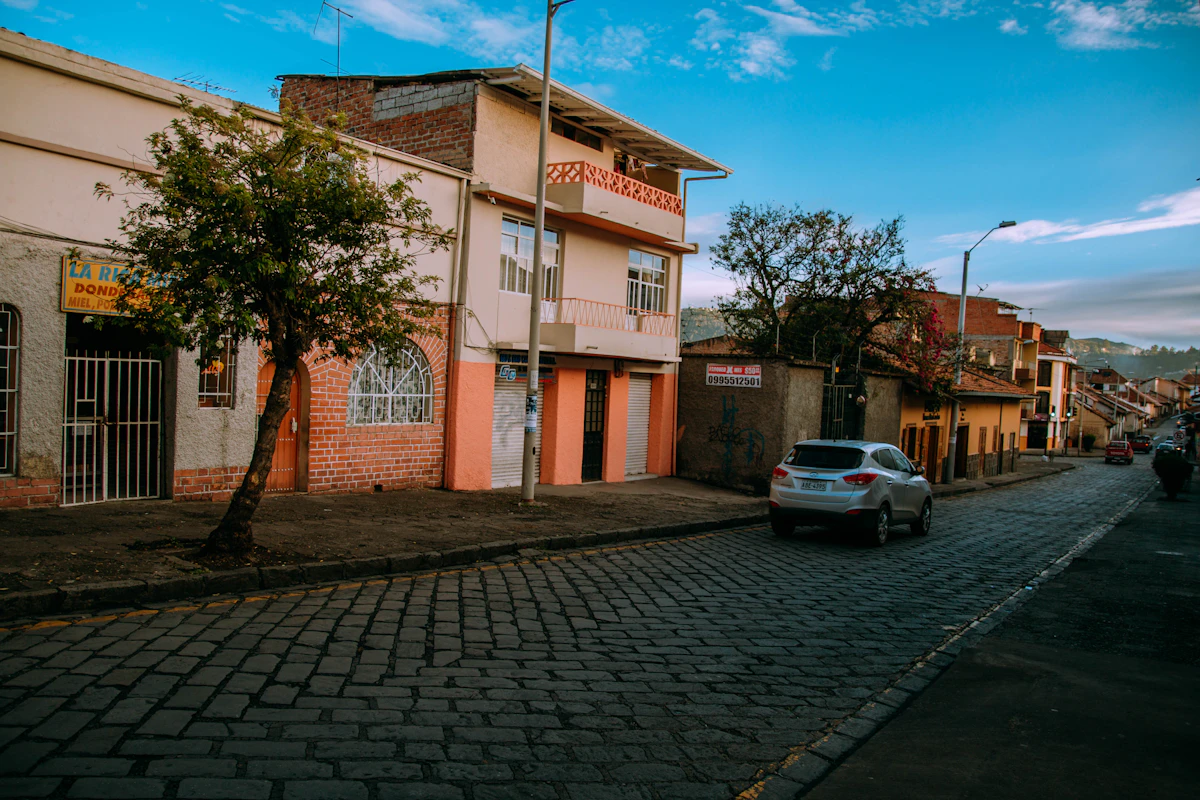
Moving to Ecuador is exciting until reality sets in around week three. That's when the honeymoon phase fades and you start dealing with daily life — the noise, the bureaucracy, the cultural differences that no YouTube video fully prepares you for. This isn't meant to discourage you. Ecuador is a wonderful place to live. But the expats who stay long-term are the ones who went in with realistic expectations.
Here's what daily life in Ecuador actually looks like, unfiltered. For a structured plan covering your first three months, see our first 90 days guide.
The Almuerzo: Ecuador's Lunch Culture
Lunch is the main meal of the day in Ecuador, and the almuerzo is the institution that proves it. An almuerzo is a set lunch served at virtually every small restaurant (comedor) and many larger ones. It typically includes a soup course, a main plate with rice, protein (chicken, beef, pork, or fish), a small salad or avocado, and a glass of fresh juice.
The price in 2026 ranges from $2.50 to $4.00 at a typical comedor. At a nicer sit-down restaurant, an almuerzo might run $5-7. This is the best food deal in Ecuador, and many expats eat their main meal out at lunch to take advantage of it.
Restaurants that serve almuerzos often only do so from about 12:00 to 2:30 PM. Show up at 3:00 and you'll likely be told "ya se acabó" — it's gone. Ecuadorians eat dinner late and light, if at all. Don't expect a vibrant dinner scene outside of major cities.
Grocery Shopping
You have three tiers of grocery shopping in Ecuador, and most expats use all three:
Supermarkets
Supermaxi is the largest chain, comparable to a mid-range US grocery store. You'll find imported products (cereal, peanut butter, canned goods) at marked-up prices. A jar of Jif peanut butter costs $6-8. Ecuadorian products are much cheaper. Supermaxi accepts credit cards and has a loyalty program (Supercliente).
Coral Hipermercados (sometimes called Coral Centro) is similar to Supermaxi but with slightly lower prices on many items. The stores tend to be a bit less polished.
Tía is a budget chain. Think dollar store meets grocery store. Limited selection but very cheap for basics.
Mercados (Local Markets)
The mercados are where the real value is. Every city has at least one covered market where vendors sell fresh produce, meat, fish, herbs, and prepared food. In Cuenca, Mercado 10 de Agosto and Feria Libre are the big ones. In Quito, Mercado Central and Mercado Iñaquito.
Expect to pay a fraction of supermarket prices: a pound of tomatoes for $0.50, a bunch of bananas for $0.25, a whole chicken for $4-5. The produce is incredibly fresh — often picked that morning. But markets can be overwhelming at first: crowded, loud, and entirely in Spanish. Vendors may quote you a higher "gringo price" until you become a regular. For detailed grocery prices and monthly budgets, see our cost of living guide.
Specialty and Import Stores
For items you can't find at Supermaxi — good cheese, craft beer, specific Asian ingredients — there are small specialty shops in most expat areas. In Cuenca, El Mercado café and Tutto Freddo carry some specialty items. In Quito, the La Floresta area has several. Prices are high, and selection varies.
What You Won't Find
Some things are genuinely hard to get in Ecuador: good tortillas, Mexican-style salsa, certain spices (smoked paprika, Old Bay), ranch dressing, maple syrup (real), and many over-the-counter medications sold under different brand names. Stock up when you visit the US, or use a mail forwarding service.
Noise and Fireworks
This is the number one complaint from new expats, bar none. Ecuador is loud. Here's what you're dealing with:
- Dogs: Street dogs and rooftop dogs bark constantly, especially at night. Many Ecuadorian families keep dogs on their rooftops or in small yards, and these dogs bark at everything — other dogs, passing cars, the wind.
- Car alarms: They go off constantly and nobody seems to care. You will hear car alarms multiple times per day and often at night.
- Bus horns and music: City buses honk to announce stops and blast music. In Cuenca, the bus exhaust adds a layer of diesel smell to the soundtrack.
- Fireworks: Ecuadorians love fireworks for every occasion — birthdays, weddings, saints' days, soccer victories, the mere existence of fireworks. They're not just on holidays. A random Tuesday at 6 AM? Fireworks. These are often the loud concussive type (voladores and camaretas), not pretty visual displays.
- Construction: Building regulations around noise are lax. Expect jackhammering and concrete mixing starting at 7 AM, including Saturdays.
- Music from neighbors: Sound insulation in Ecuadorian buildings is virtually nonexistent. Your neighbor's reggaeton is your reggaeton.
Coping strategies: Invest in quality earplugs and a white noise machine. When apartment hunting, visit the neighborhood at night before signing a lease. Upper-floor apartments tend to be slightly quieter. Some expats eventually move to quieter outlying neighborhoods and accept the tradeoff of less walkability.
Altitude Adjustment
If you're moving to Cuenca (8,400 ft / 2,560 m) or Quito (9,350 ft / 2,850 m), altitude will affect you. Period. The severity varies by person, but common symptoms during the first 1-3 weeks include:
- Shortness of breath during mild exertion (walking uphill, climbing stairs)
- Headaches, especially in the afternoon
- Fatigue and low energy
- Difficulty sleeping
- Mild nausea
- Increased urination
Most symptoms resolve within 2-3 weeks as your body acclimates. Some tips that help:
- Drink significantly more water than you normally would — at least 3 liters per day.
- Avoid alcohol for the first few days.
- Eat lighter meals.
- Don't overexercise. Walk, don't run, for the first two weeks.
- Some people take acetazolamide (Diamox) preventively — ask your doctor before you travel.
- Coca tea (mate de coca) is a traditional altitude remedy. It's legal and available in Ecuador, though its effectiveness is debated.
If symptoms are severe or don't improve after two weeks, see a doctor. In rare cases, people simply cannot acclimatize and need to move to a lower-altitude location.
Social Customs
The Cheek Kiss
When greeting someone (especially women greeting anyone, or men greeting women), the standard is a single kiss on the right cheek. It's more of a cheek touch than an actual kiss. Skipping it feels cold. Doing it wrong feels awkward. Practice: lean right, light touch, pull back. With men greeting men, a handshake is standard in most situations. In casual settings among friends, men may do the cheek-touch too.
Punctuality (or Lack Thereof)
"Ecuadorian time" is a real phenomenon. A 3:00 PM meeting might start at 3:30 or 3:45. A dinner invitation for 7:00 means guests will start arriving around 7:30-8:00. Showing up on time to a social event can actually be awkward — you may arrive before the host is ready. Business meetings are slightly more punctual, but don't count on it.
This is not rudeness. It's a fundamentally different relationship with time. Adjust your expectations, build buffer time into your schedule, and don't take it personally.
Formality and Courtesy
Ecuadorians are formal and polite. Greetings are important — always say "buenos días," "buenas tardes," or "buenas noches" when entering a shop, taxi, or conversation. Skipping the greeting and going straight to business feels rude. "Por favor" and "gracias" are essential. "Con permiso" (excuse me) when squeezing past someone. "Provecho" when someone near you is eating (like "enjoy your meal").
Language Barrier
Bluntly: most Ecuadorians do not speak English. Outside of tourist-oriented businesses and high-end hotels, you'll need at least basic Spanish to navigate daily life. Ordering food, negotiating with a landlord, talking to a doctor, dealing with the DMV equivalent (ANT), paying a utility bill — all in Spanish.
You don't need to be fluent before you arrive, but you need a plan:
- Before you move: Use Duolingo, Pimsleur, or a tutor to get basics down. Learn survival phrases: numbers, directions, food words, and how to ask "Do you speak English?" ("¿Habla inglés?").
- After you arrive: Hire a local tutor. Private Spanish lessons in Ecuador cost $8-15/hour. Group classes at language schools run $150-250 for a month of daily instruction. Immersion is the fastest way to learn.
- Translation apps: Google Translate's camera feature (point your phone at text) is a lifesaver for menus, signs, and documents. Download the Spanish language pack for offline use.
Laundry
Most Ecuadorian apartments don't have dryers, and many don't have washing machines. Laundry is typically done one of three ways:
- Lavandería (laundry service): Drop off your clothes, pick them up clean and folded the next day. Costs $1-2 per kilogram. This is the most common approach for expats without in-unit machines.
- Washing machine, line dry: If your apartment has a washing machine (or you buy one — $250-400 new), you'll hang clothes on a line or drying rack. In Cuenca's cool, sometimes cloudy climate, this can take 1-2 days. Many apartments have a rooftop tendedero (drying area).
- Hand washing: Some older apartments have a concrete washing basin (lavadero) on the back patio. This is traditional and still used in many households.
Trash Collection
Trash collection in Ecuador works differently than in the US. In most cities, a garbage truck comes through your neighborhood on a set schedule — typically every other day. You put your bags out on the curb (or hang them on a hook) shortly before the truck arrives. There's no trash can sitting at the curb all week.
In Cuenca, recycling has improved but is still inconsistent. Separate your recyclables if your building has designated bins, but don't expect a formal curbside recycling program in most areas. Organic waste can be composted if you have outdoor space.
Uber and Taxis
Uber and InDrive
Uber operates in Quito, Guayaquil, and Cuenca. InDrive (where you negotiate the fare) is also popular. Both are generally safe, reliable, and cheaper than traditional taxis. A typical Uber ride across Cuenca costs $2-4. In Quito, expect $3-8 depending on distance and traffic.
The main advantage of ride-hailing apps is the accountability: you have a record of the driver, the route, and the fare. This matters for safety.
Traditional Taxis
Yellow taxis are everywhere. In Cuenca and Quito, taxis are required to use a taxímetro (meter). Minimum fare is usually $1.50. If a driver refuses to use the meter, get out and find another taxi. At night (after 10 PM), a surcharge of 20-25% is standard.
In smaller towns, taxis often don't have meters and you negotiate the fare before getting in. Ask your hotel or a local friend what the going rate is for common routes so you don't overpay.
Safety tip: Never hail a cab from the street in Quito at night. Use Uber, InDrive, or call a radio taxi.
Making Friends
Making friends in Ecuador happens on two tracks — the expat community and local Ecuadorians — and they require different approaches.
Expat Friends
Facebook groups are the primary social hub for expats. Search for groups specific to your city (e.g., "Expats in Cuenca," "Quito Expat Network"). These groups organize dinners, hikes, game nights, and volunteer activities. The upside: instant community with people who understand what you're going through. The downside: expat bubbles can become echo chambers of complaints.
Ecuadorian Friends
Forming friendships with locals takes more effort and more Spanish. Ecuadorians are warm and friendly but also have established social circles built around family and lifelong friendships. You won't be invited into someone's inner circle quickly. The best entry points are: language exchange meetups (you teach English, they teach Spanish), sports leagues, church communities, volunteering, and your neighborhood. Being a regular at a local shop or restaurant opens doors over time.
Weekend Culture
Ecuadorians take weekends seriously, and the rhythm is different from the US. Saturday mornings are for errands — markets, hardware stores, and government offices (some are open Saturday mornings). Saturday afternoons and evenings are social: family gatherings, barbecues, and going out. Sunday is traditionally a family day. Many businesses close entirely on Sunday, or operate on reduced hours. In Cuenca, much of the city shuts down on Sunday — it's noticeably quieter.
Outdoor activities are a big part of weekend culture. Hiking Cajas National Park (45 minutes from Cuenca), visiting hot springs, or taking a day trip to a nearby pueblo are common weekend activities for both locals and expats.
Holidays and Festivals
Ecuador has more public holidays than you're used to. The big ones include:
- Carnaval (February/March): Two days before Ash Wednesday. Involves water fights. Serious water fights. You will get soaked if you go outside. It's tradition. Don't wear anything you care about.
- Semana Santa (Holy Week, March/April): The week before Easter. Banks and government offices close. Religious processions in Quito are elaborate and impressive.
- Día de los Difuntos / Day of the Dead (November 2): Families visit cemeteries, clean graves, and share colada morada (a purple berry drink) and guaguas de pan (bread shaped like babies).
- Fiestas de Quito (December 6): Quito's founding celebration. Bullfights, parades, and a lot of drinking. The chiva (party bus) culture is in full effect.
- Año Viejo (December 31 / New Year's Eve): Families build life-sized effigies (monigotes) representing the old year and burn them at midnight. Streets are filled with smoke, fireworks are nonstop for hours, and men dress as "viudas" (widows) to mourn the old year. It's one of the most unique New Year's traditions in the world.
- Local fiestas: Every city and town has its own founding day celebration, usually involving parades, concerts, and fireworks lasting several days. In Cuenca, Fiestas de Cuenca (November) is a week-long affair.
The Bottom Line
Daily life in Ecuador requires flexibility, patience, and a sense of humor. The things that frustrate you in month one — the noise, the pace, the bureaucracy — often become the things you accept (or even appreciate) by month six. The key mindset shift: Ecuador is not broken. It's different. The sooner you stop comparing everything to how it works "back home," the sooner you'll actually start enjoying your life here.
The expats who struggle most are the ones who expect Ecuador to be the US with better weather and cheaper rent. It's not. It's Ecuador — messy, beautiful, loud, warm, and completely its own thing. For more on choosing the right neighborhood, see our where to live guide, and for safety tips specific to daily routines, check out is Ecuador safe?.